

Should students prefer tier two colleges with good placements
Confused between top colleges and Tier 2 colleges with good placements? A clear, empathetic guide for Tamil Nadu engineering aspirants and parents.
Choosing between a “big-name” college and a lesser-known Tier 2 college with strong placements is one of the biggest dilemmas for Tamil Nadu engineering aspirants and their parents. In many homes, this leads to long discussions, WhatsApp debates, and quiet stress. For some students, board marks or entrance results didn’t go as expected, and the dream of NITs or top private colleges suddenly feels distant. Parents wonder whether to chase higher-ranked colleges elsewhere or choose a stable Tier 2 college nearby with good placement records. This is where a calm, realistic approach is needed.
What does “Tier 2 college with good placements” really mean?
Tier 1 usually refers to IITs, NITs, IIITs, and a few prestigious institutes known for research, strong faculty, and excellent placements. Tier 2 colleges, on the other hand, include well-recognised engineering colleges that may not have national-level branding but still offer decent infrastructure, experienced faculty, and reasonable outcomes. Many private universities and affiliated colleges in Tamil Nadu fall into this category. Their highest packages may sound impressive, but most students land in the average salary range. To judge a Tier 2 college, students and parents must pay attention to consistent placement percentages, particularly for CSE, IT, or ECE, along with average packages and recruiter lists from the past few years.
The real confusion for Tamil Nadu students
Tamil Nadu students juggle multiple admission paths—TNEA (based on board marks), JEE Main for NITs/IIITs, COMEDK, and other private exams. Many students end up in the “middle zone”—not high enough for NIT Trichy or top private institutes, but eligible for good branches in Tier 2 colleges claiming strong placements. This confusion increases emotional pressure. Students compare themselves with peers getting into high-profile colleges, while parents worry about long-term outcomes. It is important to cut through the noise and focus on real, branch-specific data.
Why placements matter – but are not everything
Placements are crucial for families investing significant money into engineering education. A Tier 2 college offering consistent placements in stable IT roles can be a practical choice. However, your future depends not only on campus placements but on self-learning, projects, coding practice, internships, and continuous skill-building. Many students from Tier 2 colleges go on to secure product-based roles, pursue higher studies, or enter startups due to their personal initiative. Good placements give a strong base, but long-term success depends on your own efforts.
When a Tier 2 college with good placements can be a smart choice
A Tier 2 college with reliable placement performance—especially in CSE, IT, and ECE—can be an excellent choice. If the college shows 70–80% placements in your branch, stable recruiters, and transparent placement statistics, it provides both security and opportunity. This option becomes even better when the fees are reasonable and the average package aligns well with the overall financial investment. For many families hoping to avoid heavy loans or financial strain, Tier 2 colleges with solid outcomes offer strong value and peace of mind.
When pushing for a higher-tier college still makes sense
Students close to NIT/IIIT cut-offs or competitive private institutes may benefit from waiting for better options, especially if they can afford higher fees and hostel expenses. Top-tier institutes offer advantages like stronger peer groups, better exposure, alumni networks, and research opportunities. These factors become important if you are aiming for advanced technical careers, higher studies abroad, or want access to a more competitive ecosystem. Choosing a tougher but more rewarding path can make sense for motivated students.
Understanding ROI of different options
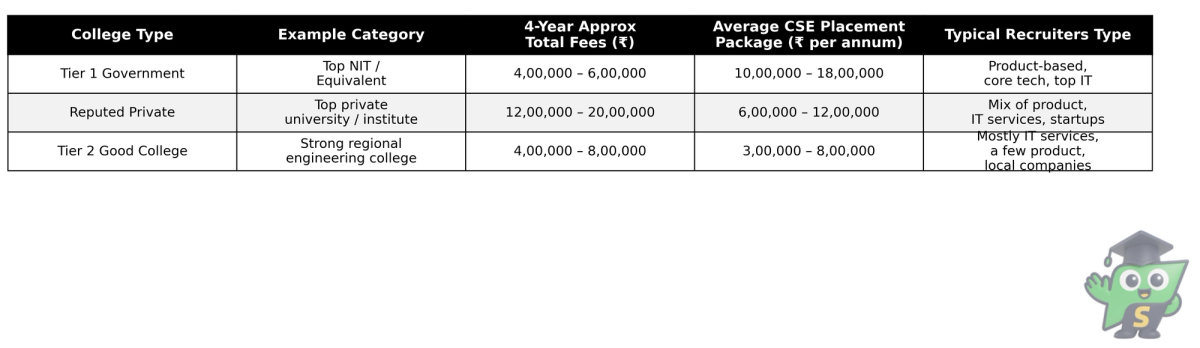
Common realities inside Tier 2 colleges
Inside most Tier 2 colleges, the experience is mixed. In CSE and IT, placements are generally strong, supported by mass recruitment from IT firms. However, core branches like Mechanical, Civil, and EEE may face fewer opportunities. Academically, students may encounter a mix of excellent and average faculty. The environment often focuses more on exams than conceptual depth. Students who excel are those who use college resources as a foundation but rely heavily on self-learning, online platforms, internships, and project work. Campus life is usually simpler but comfortable for many students.
How to judge if a Tier 2 college’s “good placements” are real
Do not go by advertisements or vague claims. Verify branch-wise placement statistics for the last 3–4 years. Look at average salary, not just the highest package. Check how many companies regularly visit and what types of roles are offered—development, testing, support, or core engineering. Talk to final-year students and recent graduates, especially from your branch. Ask them about coding culture, actual campus support, internship opportunities, and how much they had to depend on self-learning.
How this decision feels emotionally for students
For many students, this decision is not just academic—it’s deeply emotional. Seeing friends join IITs, NITs, or famous private institutions can create feelings of self-doubt. It may feel like settling for less when considering a Tier 2 college. But marks and ranks do not define long-term potential. Countless successful engineers today come from Tier 2 or Tier 3 colleges but built exceptional careers through consistency, skill-building, and confidence. This phase is temporary; your career is built over many years.
Common mistakes students make in this decision
One common mistake is choosing a college only for its brand name while compromising on branch interest. Some students pick branches they dislike just to show they are in a top institute, leading to frustration later. Another mistake is believing every placement statistic without verification. High packages may come from a handful of students, while real averages remain lower. A third mistake is avoiding out-of-state or alternative entrance options due to confusion or fear. Students should explore all options calmly before making decisions.
How to gently correct these mistakes
Start by identifying your true priorities—branch, campus environment, financial safety, or brand value. Make decisions based on long-term fit, not temporary comparison. Gather information from reliable sources: official data, senior feedback, counselling sessions, and trusted mentors. Use helpful resources such as Complete Guide to Engineering Entrance Exams for Tamil Nadu Students , How to prepare for TNEA cut off based admissions . With clarity, many options become simpler and less stressful.
Balancing board vs entrance focus
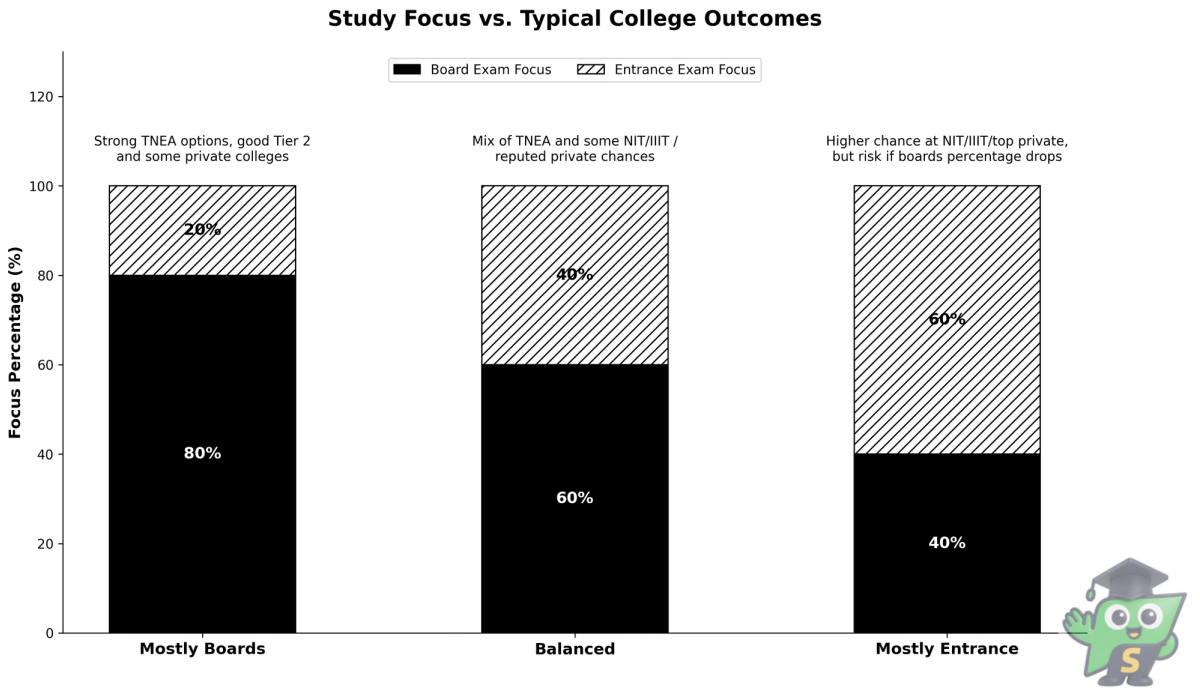
Role of exams like JEE, TNEA, and COMEDK in this choice
Your exam strategy directly influences whether you end up choosing between Tier 1 and Tier 2 colleges. Students balancing boards with JEE Main and COMEDK often have wider opportunities across India. Those focusing only on TNEA rely solely on board performance. Students who plan early—using resources like Should Tamil Nadu Students Write JEE?, How to Manage Both Board Exams and JEE , Common JEE mistakes Tamil Nadu students make, Last 30 Days Before JEE Main, and How to Choose Coaching for JEE in Tamil Nadu —can keep both pathways open and avoid last-minute panic.
Should you take a drop year instead of joining a Tier 2 college?
A drop year can be beneficial if you are confident about improving your rank significantly and have a clear preparation plan. It requires discipline, emotional strength, and family support. But it also carries risk—there is no guarantee of a major improvement. For many students, joining a reputable Tier 2 college now and later growing through GATE, CAT, GRE, or skill-based routes can be a more stable path. The How to decide if a student must attempt a drop year helps families make this choice without pressure.
How parents can support during this decision
Parents play a huge role in reducing stress. The best support is reminding children that their worth is not defined by ranks or college names. Open conversations about interests, strengths, and realistic goals can make a big difference. Parents can verify fee structures, hostel conditions, placement stats, and safety while helping the child stay calm. Avoid comparison with neighbours or relatives. A supportive environment helps students think more clearly and choose wisely.
Where Prof Sam fits into your journey
Prof Sam’s counselling aims to guide students through complex choices—Tier 1 vs Tier 2, branch selection, exam planning, and drop-year decisions. By analysing marks, rank, interests, and family goals, personalised counselling helps students understand realistic pathways. Resources such as What rank is needed for NIT Trichy and How to decide if a student must attempt a drop year offer clarity for NIT/IIIT expectations and drop-year considerations. The goal is not to force a particular college but to help you reach a decision with confidence and peace.
Other Helpful Guides for Your Journey
Here are internal links you may want to explore next:
📌 How to judge placement quality
📌 How to compare fees and ROI
📌 What to ask during college campus visits
📌 Should students prefer tier two colleges with good placements
📌 How to compare private colleges
📌 NRI quota college selection
📌 How students can avoid marketing traps by colleges
📌 How to compare first year experience across colleges
📌 What makes a good engineering culture
If you want personalised clarity, you can book a session at:
Final thoughts: So, should you prefer a Tier 2 college with good placements?
For many Tamil Nadu students, a Tier 2 college with consistently strong placements—especially in CSE and IT—is a practical and smart choice. It offers stability, affordability, and good outcomes when combined with self-effort. For students close to top college cut-offs and willing to push harder, aiming for a Tier 1 college can provide long-term benefits. Ultimately, what matters most is choosing a path that suits your interests, financial reality, and growth mindset. With focused learning and the right guidance, you can succeed from any college tier.
Need Personalized Guidance?
Book a consultation with Prof Sam and get expert advice tailored to your child's unique needs.
Book Your Consultation