
Hostel quality checklist
A warm, practical hostel quality checklist for Tamil Nadu engineering aspirants and parents, covering comfort, safety, ROI, and how Prof Sam can guide your choices.
Hostel is where you slowly grow into an adult—where you deal with bad exam days, celebrate your small victories, recover from illness, and learn independence. For a Class 11 or 12 student dreaming of engineering, hostel quality becomes a silent force that can support your success or quietly drain your energy. Families often focus on marks, ranks, branches, or “best engineering colleges India,” but only after admission do they realise that hostel life strongly affects health, concentration, and confidence.
Why hostel quality is a big decision
For many Tamil Nadu students, hostel is the first time away from home. One week you are in a familiar house where someone wakes you up, serves hot coffee, and reminds you about homework. Next week you are in a new room with strangers, fixed mess timings, study hours, and rules you are still learning. This sudden jump can feel exciting for some and scary for others, but in both cases, hostel quality shapes how smoothly you adjust.
Hostel quality also matters if you are targeting competitive exams like JEE Main along with your college work, thinking about NIT/IIIT, or planning for strong CSE placements India‑wide. If your environment is constantly chaotic, you will find it much harder to maintain a disciplined routine, revise regularly, or sit for mock tests with a fresh mind. That is why hostel must be part of the same decision package as exam strategy, branch choice, and college selection, not an afterthought you leave to the last minute.
Room, hygiene, and daily comfort
The first part of your hostel checklist is very simple but very powerful: can you stay healthy and reasonably comfortable here for four years. Many brochures show bright, polished photos of rooms, but the real experience is felt when you actually stand inside the building, smell the corridor, and look at the bathrooms. When you or your parents visit, imagine not just one day but four monsoons, four summers, and many exam seasons in that space.
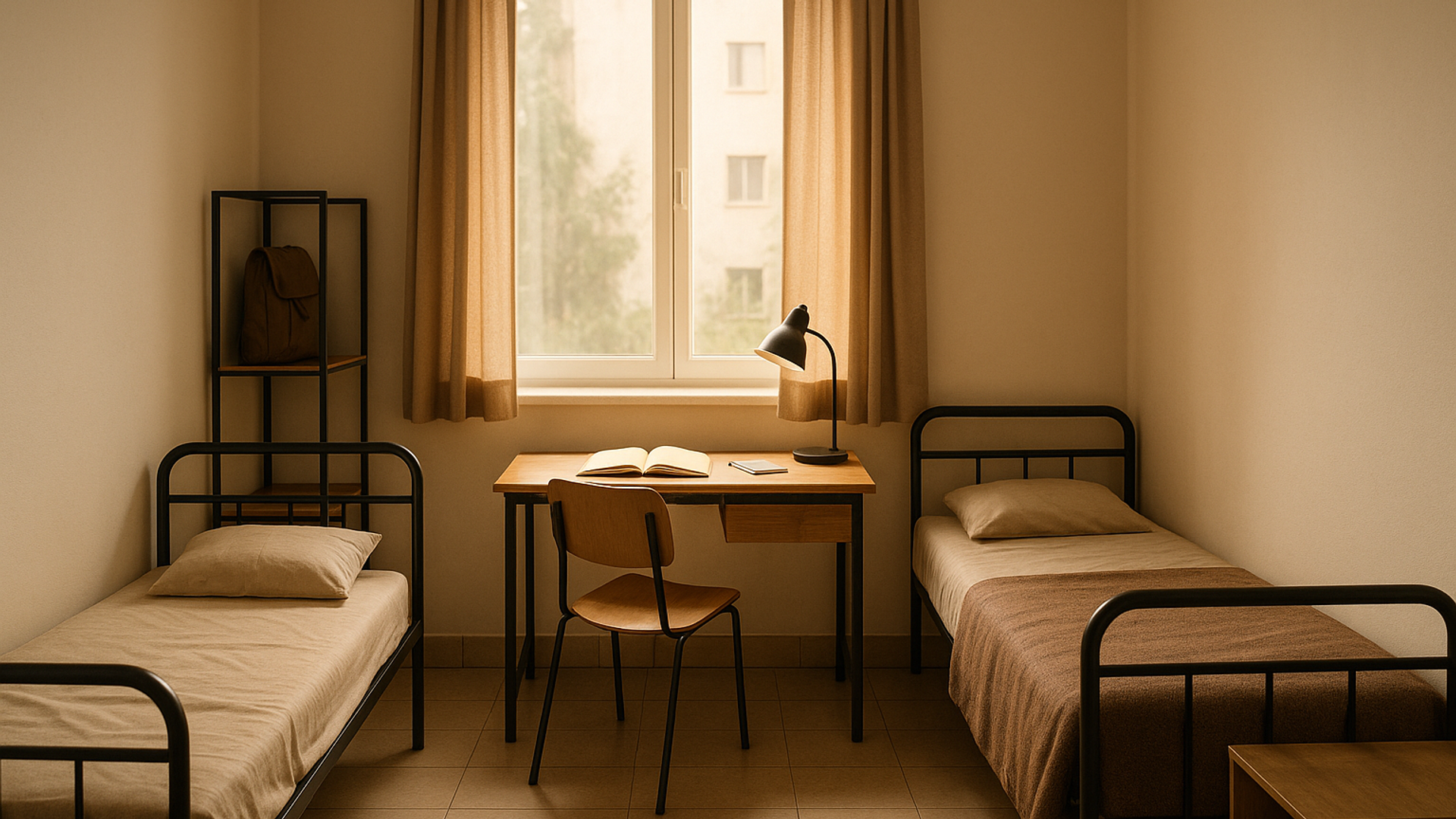
Inside the room, look at how many people share it and how much personal space each student gets. Two‑sharing with proper cots, mattresses, individual cupboards, and study tables feels very different from four or five students squeezing into a small room with luggage stacked in every corner.
Bathrooms and toilets are another major part of daily comfort. Many students and parents feel shy to inspect washrooms during visits, but this is exactly where you should spend a few quiet minutes. A hostel that takes hygiene seriously is already giving you a better chance at stable health and consistent attendance.
Food, health, and energy levels
Food quality directly affects your immunity, energy, and mood. Poor mess food—oily, unhygienic, or repetitive—causes students to skip meals or eat junk outside, leading to acidity, stomach problems, and frequent fever that hurt exam performance. When you visit, observe the dining hall during meal times. Notice if plates and tables look clean and whether students seem satisfied or constantly complaining.
Health support goes beyond food. Ask if the hostel has a first-aid box, ties with a nearby clinic, and a clear emergency process. Find out if wardens stay on campus at night and who takes responsibility if a student falls ill. In a crisis, this matters more than branch rankings or placement stats. Sensible health arrangements help you feel safer, which builds better immunity and focus.
Safety, rules, and hostel culture
Safety is Tamil Nadu parents' biggest concern—ragging, peer influence, late-night activities, and discipline. Your checklist must include both physical and emotional safety. Physical safety means security guards, CCTV, separate hostels, controlled entry, and visitor policies. Emotional safety means anti-ragging enforcement, responsive wardens, and zero tolerance for bullying.
Observe the hostel gate. Are IDs checked? Are visitors monitored? Well-managed hostels have clear curfew timings and attendance systems for safety, not restriction. Talk to current students about wardens, complaint resolution, and ragging control. Their tone reveals more than words. A supportive senior culture, where seniors guide juniors academically, is valuable.
Study environment, Wi‑Fi, and exam goals
Engineering students need a stable study environment. Hostels claim Wi-Fi and study halls, but Wi-Fi might be weak and study halls noisy. Ask if there are dedicated reading rooms, when they open, and if there is supervision. Check with current students about actual Wi-Fi quality in rooms. Reliable internet for online classes, coding platforms, and placement prep is essential.
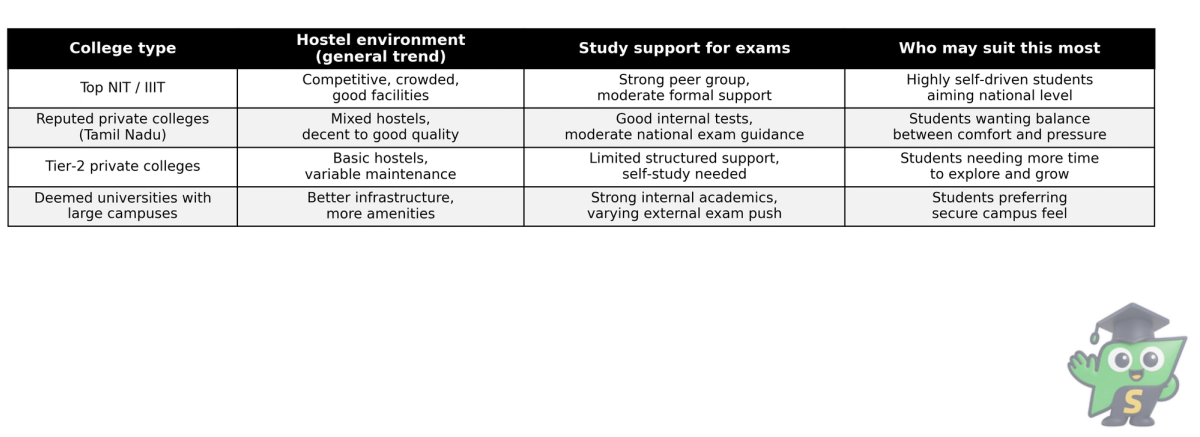
Typical hostel–academics balance in different engineering college types
Money, hostel fees, and real ROI
Hostel fees form a large part of total education costs. While discussing private engineering colleges ROI, many families consider only tuition fees and placement packages. But hostel fees significantly affect affordability and overall value.
Evaluate the complete cost: tuition, hostel fee, mess charges, travel, books, and exam-related expenses. Sometimes, a mid-level college with a safe and clean hostel offers better value than a high-fee campus where facilities do not match the price. Conversely, slightly higher hostel fees may be justified if they offer better hygiene, sleep quality, and study environment.
When families see everything together—hostel living conditions, academic quality, branch strength, and placement outcomes—it becomes easier to decide which college offers the best long-term return on investment.
Common hostel mistakes students make
Students and parents often make predictable mistakes that lead to regret.
One mistake is choosing a college based solely on location or reputation. A college in a major city does not automatically guarantee high hostel quality. Another mistake is relying on outdated feedback from someone who studied there years ago. Hostel management and cleanliness can change significantly over time.
Another error is ignoring your own personality. If you need quiet for sleep or study, a very social or noisy hostel can drain your energy. Students sometimes assume they will “adjust,” but the hostel environment directly affects academic confidence. Understanding your nature and choosing accordingly is essential.
Students also underestimate emotional challenges. The first months in hostel can bring homesickness, loneliness, or stress. Social media highlights fun hostel memories, but the adjustment phase can be difficult. Planning emotionally—knowing whom to call, how to handle tough days, and where to seek support—helps you settle in better.
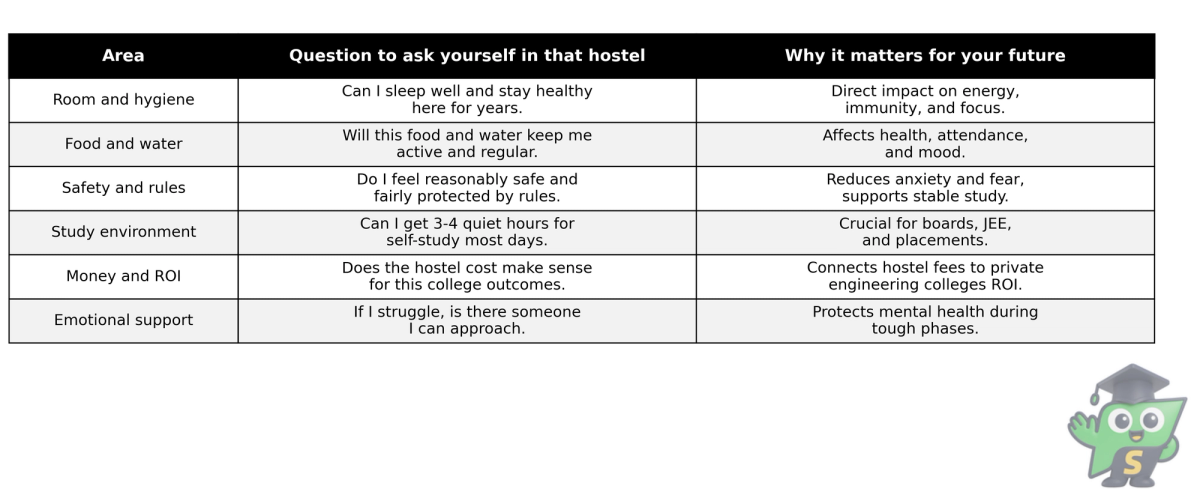
Hostel Assessment Checklist
How parents can gently support hostel decisions
For many parents, hostel decisions come with a mix of pride and worry. They may feel anxious about safety, food, peer influence, and emotional well-being. Parents can support better by treating hostel inspection as seriously as academic inspection.
During campus visits, they should check rooms, bathrooms, mess, and safety systems with genuine attention. Asking specific questions about cleaning schedules, wardens, medical support, and complaint handling shows the management that families care about student well-being.
After the student joins hostel, parents should maintain balanced communication. Instead of focusing only on marks, ask about sleep, food, friendships, and routines. When students share concerns, listening calmly helps them feel supported. This encourages them to seek help earlier for bigger issues and prevents emotional burnout.
How Prof Sam fits into your hostel and college choices
Prof Sam’s guidance extends beyond branch selection and exam strategy. Choosing a hostel that suits your personality, comfort level, and academic goals is also a key part of your engineering journey. During counselling, you can discuss whether you are ready for strict hostels, long travel distances, or out-of-state campuses. Hostel conditions matter even more if you are considering distant colleges, NRI quota seats, or planning a drop year.
If you are deciding between colleges with different hostel qualities, Prof Sam can help you understand trade-offs between discipline, freedom, academic support, and student culture. This reduces confusion and helps you choose a place where both your studies and well-being can thrive.
Book Consultation with Prof Sam for Strategic Planning
Other Helpful Guides for Your Journey
Here are internal links you may want to explore next:
📌 How to judge placement quality
📌 How to compare fees and ROI
📌 What to ask during college campus visits
📌 Should students prefer tier two colleges with good placements
📌 How to compare private colleges
📌 NRI quota college selection
📌 How students can avoid marketing traps by colleges
📌 How to compare first year experience across colleges
📌 What makes a good engineering culture
A simple checklist you can carry with you
When you and your parents go on campus visits or sit at home comparing possibilities, it helps to have a very short hostel quality checklist at the back of your mind. A neat table with a few main areas and key questions can be turned into a printable or phone‑friendly image with the Prof Sam watermark. You can pull it out during counselling rounds or while discussing colleges with relatives, so that conversations stay focused on what truly affects your life.
Need Personalized Guidance?
Book a consultation with Prof Sam and get expert advice tailored to your child's unique needs.
Book Your Consultation