

How to compare first year experience across colleges
How to compare first year experience across colleges for Tamil Nadu students, with honest advice, routines, examples, and Prof Sam’s expert tips.
Every Tamil Nadu student feels that mix of excitement and confusion while choosing the first engineering college. You imagine labs, campus life, and new friends, but comparing colleges, scores, and everyone’s advice quickly becomes overwhelming, and you quietly wonder, “What will my first year really be like here?”
If you are a Class 12 student or a parent, you are probably already juggling board marks, TNEA doubts, and endless opinions about placements and campus life. That is exactly where Prof Sam comes in – to stand beside you like a mentor, with calm, honest guidance and real stories, so this big decision feels a little lighter and a lot more personal.
The Real Problem: More Than Just NIRF Ranks and Logos
In Tamil Nadu, engineering is almost a tradition in itself. You look up course cutoffs, compare Computer Science placements, hear about NIT Trichy from toppers, and check NIRF ranks side-by-side. But let’s pause for a moment. Numbers are important – marks, cutoff lists, placement percentages. Still, the true first-year experience is so much more than that.
The reality is, first-year engineering is full of change. You’re leaving behind twelve years of school rules, suddenly responsible for your own timetable, and meeting students from all over – sometimes even from the other side of the country or globe. What makes things even trickier is that no two colleges do this first year in the same way. Some have robust induction programs, some dive straight into coding projects, while others give a lot of freedom or focus on strict attendance.
So how do you compare all this in a way that truly helps you and your family make a good decision?
Why Do Students and Parents Feel So Anxious?
For most Tamil Nadu families, college after Class 12 is not just about learning, it feels like a big life investment. Parents worry whether their child will adjust, be safe in a hostel, get caring teachers, and cope with a new environment. Students silently ask if they will find real friends, manage English notes and engineering maths, and still feel worthy if their JEE score is lower than others.
Priya’s story shows how much support matters. Coming from a Tamil‑medium government school, she struggled with fast English lectures at first. With weekly mentoring sessions, kind teachers, and a small study group, she slowly caught up and became active and confident in her branch. First year will still have bumps like hostel food, homesickness, or patchy WiFi, but the right campus culture, teaching style, and support systems can turn that year from lonely and scary into a strong, empowering start.
Exploring the Facts: Fees, Cutoffs, and Placement Data
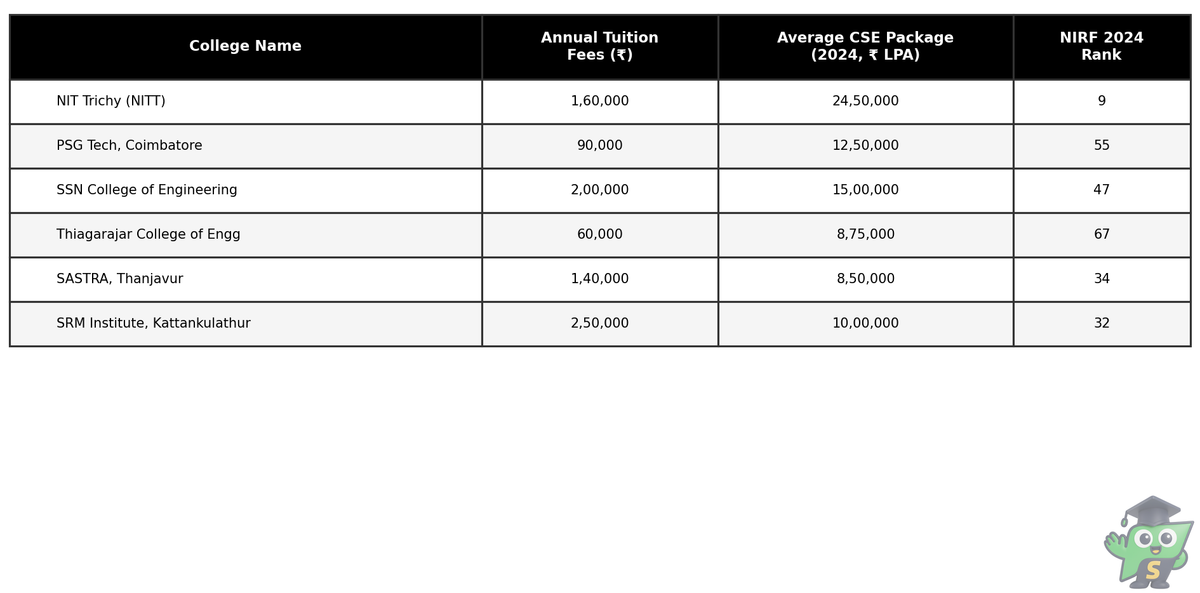
Now, let’s get practical. Amid all these stories, numbers do help anchor your decision. You’ll likely oscillate between government, government-aided, and private engineering colleges. Fees can swing wildly – from just a few tens of thousands per year in a government college to over a lakh in private institutions with NRI quota management seats. Placement rates are also different: top CSE branches often have double or triple the placement rates of other streams.
Top Tamilnadu Engineering Colleges - Fees vs CSE package vs NIRF Rank
The Details That Make or Break Your First Year
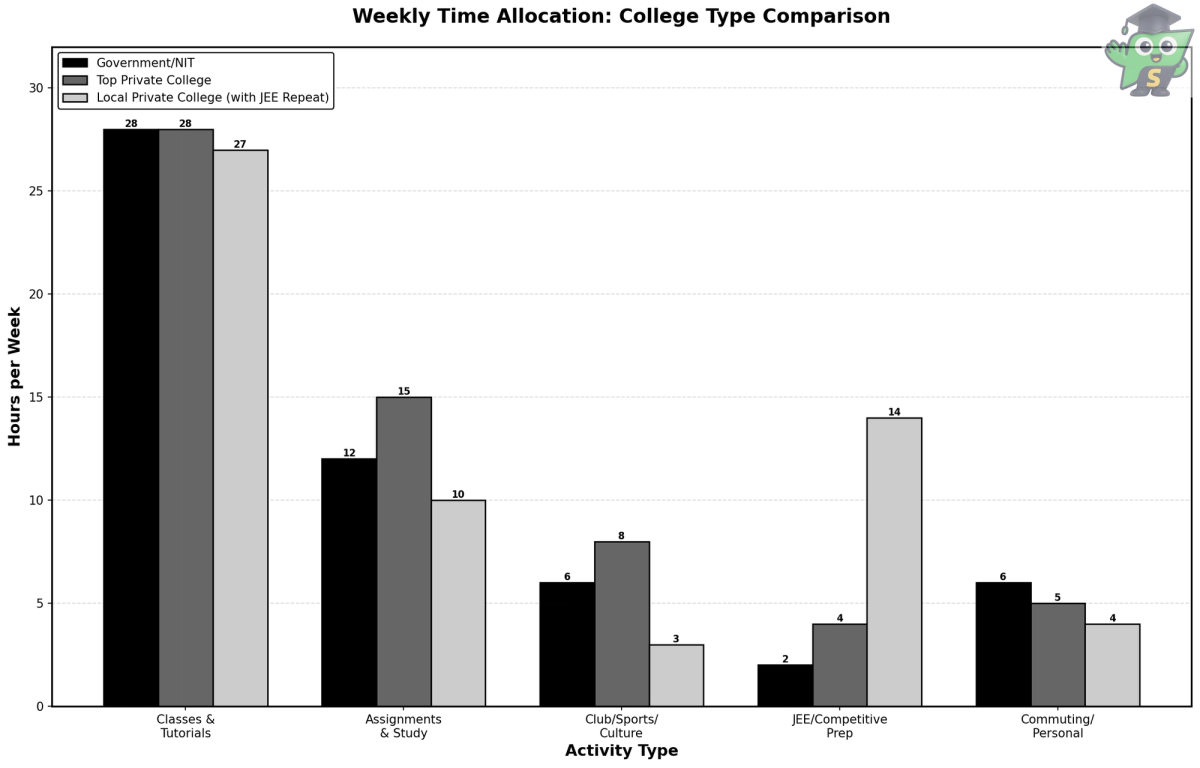
Beyond numbers, here's what you'll actually notice, sometimes only after a few weeks in your new college: vibrant clubs run by students who genuinely welcome juniors, or institutions where societies barely exist. Hostel life swings wildly too – from clean, safe spaces with caring wardens to places where accommodation feels forgotten. Top-ranked institutes often jump into hands-on learning, coding bootcamps, and robotics clubs from Day 1, while others stick to traditional lectures with projects only in second year. Real friendships and mentors matter enormously, especially if English feels new or you're naturally shy. Colleges with strong peer mentoring see freshers adjusting quickly and leading by second semester. Time allocation is key – balancing branch subjects, exam prep like JEE Main repeats, clubs, and social connection shapes your entire first year differently at each college.
Time allocation breakdown – first-year student (hours per week)
Realistic Routines: What Works and What Doesn’t
Picture Deepak, who joined an NIT dreaming of computer science. Despite being a school topper, endless labs and English lectures threw him off balance. His college's mentoring system with approachable seniors and hostel doubt sessions saved him – though he still burned midnight oil juggling coding club and deadlines. Sahana, at a private Coimbatore college, faced different pressure: less structured clubs meant personal discipline became everything. The lesson? Whether you're at an NIT, private deemed university, or commuting locally, success comes from routines that fit your actual goals and comfort, not someone else's schedule.
Many colleges offer foundation programs – special workshops in semester one to bridge gaps from Plus Two in English, math, or coding. Others leave you to swim alone. Always ask seniors or counselors about these; they're game-changers if you feel under-confident. Pick at least one club or activity that genuinely excites you, even if you're naturally quiet – these moments make college unforgettable and ease the transition. If you're eyeing JEE Main repeats, NIT transfers, or branch changes, protect your study blocks early.
Find strategies and real stories here:👉 Common JEE mistakes Tamil Nadu students make , Last 30 Days Before JEE Main and How to decide if a student must attempt a drop year.
The Mistakes Most Freshers Make – and How to Fix Them
It’s normal to make mistakes while settling into engineering college. A common one is focusing only on marks and placements, while ignoring clubs, friends, and activities that actually help you grow. Another is staying silent about problems with hostel life, English, or subjects instead of asking for help early.
Many freshers copy seniors blindly or avoid teachers because they feel doubts are “silly”, while some join every club and then get exhausted. Remember, engineering is a long journey, not a race you must win in the first semester. If you feel lonely, overloaded, or unhappy with your choice, don’t rush into big decisions. Talk to faculty advisors, use bridge courses, peer mentoring, or counseling if available, and give yourself time. Small adjustments and steady effort can slowly rebuild your confidence.
You can explore more tips to gently overcome mistakes in our detailed guide here: Common JEE mistakes Tamil Nadu students make .
How Parents Can Support – Real Ways That Make a Difference
For parents, this transition is just as emotional as it is for your child. You may be choosing between distance, fees, curriculum, and your own dreams for your child’s future. The key? Listen closely to your child’s honest worries about the first year, whether about food, friends, or feeling lost. Respond with support, not pressure. Celebrate small wins and efforts, not just marks.
If homesickness or stress hits, reassure your child that adjusting takes time and every student faces rough patches. Stay in touch, but empower them to sort out smaller issues independently. Participate in college orientation events if possible, and keep an ongoing conversation about mental wellbeing, time management, and balancing social life with studies. Know that it’s okay to seek outside help, from counselors or mentors, if needed.
You may find these resources useful: Complete Guide to Engineering Entrance Exams for Tamil Nadu Students.
How Prof Sam Can Help You Find and Compare the Right Fit
Comparing the first-year experience takes more than rank tables or one-size-fits-all counseling. Prof Sam brings in-depth career guidance customized to Tamil Nadu students, grounded in warmth and honesty. Whether it’s one-on-one counseling sessions, helping you shortlist the right branch or college, working out JEE/TNEA/COMEDK strategies, or making difficult choices around NIT, IIIT, or even taking a gap year, our experienced mentors walk the tough road with you. We focus on helping you find a campus where you can actually thrive through real stories, right-fit routines, and backup plans.
If you’re confused about comparing colleges, placements, or planning your next steps, you’ll find tailored support, application tracking, cutoff analysis, and compassionate counseling with us at every critical moment. Explore more through our detailed comparison posts: TNEA vs COMEDK , What rank is needed for NIT Trichy , How to decide if a student must attempt a drop year, and our dedicated counseling desks.
Related Topics
📌 How to judge placement quality
📌 How to compare fees and ROI
📌 What to ask during college campus visits
📌 Should students prefer tier two colleges with good placements
📌 How to compare private colleges
📌 NRI quota college selection
📌 How students can avoid marketing traps by colleges
📌 How to compare first year experience across colleges
📌 What makes a good engineering culture
Final Thoughts: Your First Year is a New Chapter, Not a Final Exam
Choosing the right college for your first year is important – but it’s also the start of a much bigger adventure. Marks, cutoffs, and placements matter. But what matters more is how you learn to ask questions, make friends, and adjust to the experience at your own pace. Don’t compare yourself to others based on brand names or placement stats alone. Let your first year be about finding out what excites you, building lifelong habits, and becoming comfortable with yourself.
In the end, what shapes your engineering journey isn’t just the classroom – it’s your routines, your support networks, and your ability to gently keep improving. Prof Sam and the team are always here as your cheerleaders, guides, and reality-checkers as you take your first steps. Remember, your worth is more than a rank. Welcome to your new chapter.
If you’d like help planning your journey, you’re not alone.
👉 https://www.profsam.com/
Need Personalized Guidance?
Book a consultation with Prof Sam and get expert advice tailored to your child's unique needs.
Book Your Consultation