How to talk to teens about career choices
A warm, practical guide for Tamil Nadu teens and parents on how to talk about engineering career choices, TNEA, JEE, and college options without panic
Choosing a career after Class 12 is not just about marks and cutoffs; it is about identity, fear, family expectations, and dreams that feel fragile. In Tamil Nadu homes, this conversation can become a fight or a turning point where the student finally feels understood.
The real pressure inside a Tamil Nadu home
If you are a Class 11 or 12 student in Tamil Nadu, you may wake up with one question: “What will happen after my board exams?” You hear words like TNEA, JEE Main, NIT, IIIT, counselling, cutoffs, and placements almost every day, yet still feel unsure about what you truly want. Some days Computer Science looks attractive because it has “scope,” another day Mechanical feels right because you like machines, and on bad‑marks days you may doubt if you will get a good college at all.
Parents also feel strong pressure, even if they don’t show it. They worry about fees, job security, relatives’ comments, and whether their child will regret this decision later. Because many never had proper career guidance, they fear making a mistake, so career talks feel like a once‑in‑a‑lifetime decision rather than one step in a long journey. In this atmosphere, students compare themselves with toppers and think, “If I don’t get NIT Trichy or a top college, I am a failure,” which is dangerous because it ties self‑worth to one exam, even though marks and ranks only open options and never define your value.
Why career conversations feel so hard
Career talks feel difficult because both sides fear judgment. The student is scared of hearing “You are not serious” or “You are wasting our money,” while the parent fears “You don’t understand me” or “You forced me into this,” so both become defensive even though they want the same stable, happy future.
Too much information adds to the confusion. Schools push board results, coaching centres highlight top JEE ranks, relatives talk about some friend’s child, and websites show endless college lists, while basic questions like “What do you enjoy?” and “Where do you perform well?” get ignored. For Tamil Nadu students, many routes—TNEA, JEE Main, private universities, management quota, and non‑engineering options in commerce, arts, design, and more—make it even harder, and when families do not clearly understand these paths, conversations turn stressful instead of empowering. How to prepare for TNEA cut off based admissions Should Tamil Nadu Students Write JEE?
Seeing the teen’s world from the inside
Before talking about careers, it helps to see the teen’s daily reality. A typical Class 12 student juggles school portions, tests, board prep, maybe JEE coaching, practical records, and constant comparison with classmates. On top of that, social media and WhatsApp show only highlights like 99 percentiles, NIT admissions, and big salary offers, which increases pressure.
Inside, many students feel, “If I say I am confused, my parents will panic. If I act clear, I am not honest.” This inner conflict is heavy, especially when every adult keeps asking, “What are you going to do after twelve?” Some over‑agree with parents to avoid arguments, and others shut down and avoid all future‑related talk. Understanding this emotional layer is the first step; when parents and mentors accept that confusion is normal, students feel safe to discuss doubts about branches, colleges, or even a drop year, and only then does information about cutoffs and ranks truly help. How to decide if a student must attempt a drop year
How to start a calm, honest career talk
Good career conversations rarely start with, “Which branch do you want?” They begin with softer questions like, “How are you feeling about next year?” or “Which subjects feel natural for you?” so the teen feels less judged and more willing to share what is really going on inside.
Choosing the right moment also matters. Instead of starting just after a test result or scolding, pick a quiet evening, keep phones and TV aside, and say clearly that the goal is to understand, not to fix everything that day, so the student can openly say things like “Maybe CSE, but I am scared of coding,” or “I like electronics but don’t know about jobs.” From there, you can slowly explore realistic options together—TNEA colleges at different mark ranges, JEE Main as a path to NIT Trichy or other NITs and IIITs, and local private colleges with particular strengths—so you build a simple map of “if you are around this range, these doors open; if not, here are backups,” and life stops feeling like all‑or‑nothing. What rank is needed for NIT Trichy
Balancing boards, JEE, and mental health
For many Tamil Nadu engineering aspirants, a daily doubt is, “How much time should I give for boards, how much for JEE, and will I have any rest?” When this balance is unclear, parents feel the child is “wasting time,” and students feel constantly criticised, which hurts both studies and mental health.
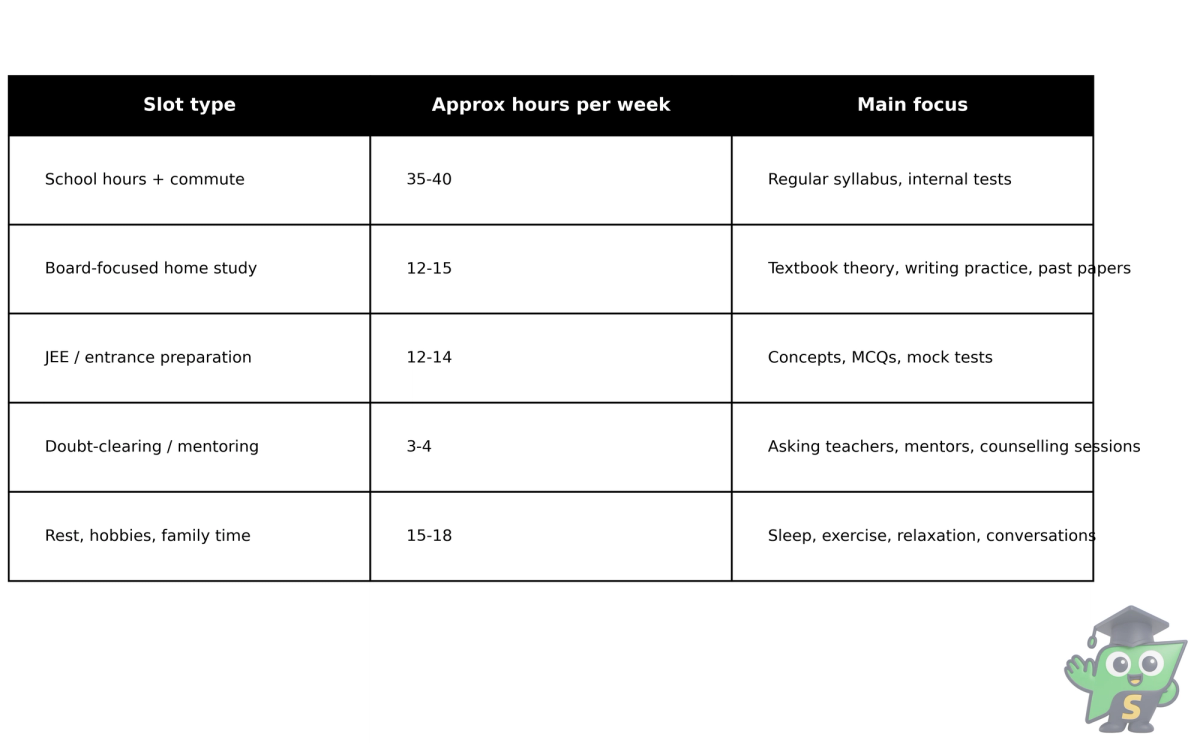
A practical way is to roughly divide the week into school time, board‑focused study, entrance‑focused practice, time for mentoring or doubt‑clearing, and real rest. When parents understand this pattern, they stop expecting the child to focus only on board portions or only on JEE material and start seeing the logic of a balanced plan. The student then feels supported instead of watched and judged all the time.
Weekly time split for Class 12 (Boards + JEE Main)
Common mistakes students make, and how to gently fix them
Career talks feel difficult because both sides are afraid of being judged. The student fears hearing “You are not serious” or “You are wasting our money,” while the parent fears “You do not understand me” or “You forced me into this.” Both become defensive, even though they actually want the same thing: a stable, happy future.
There is also confusion from too much information. Schools stress board results, coaching centres highlight top JEE ranks, relatives talk about some friend’s child in a big company, and websites show endless college and branch lists. In this noise, simple questions are missed: What problems does the student enjoy solving? In what kind of environment do they do well? How do they handle stress? For Tamil Nadu students, multiple pathways make it worse: TNEA based on Class 12 marks for government, government‑aided, and many private engineering colleges; JEE Main, a national‑level exam opening NITs, IIITs, and more; plus private universities, management quota, and non‑engineering options in commerce, arts, design, and others. When families do not fully understand these choices, discussions become stressful instead of empowering.
Understanding TNEA, JEE, and college options together
To have a meaningful talk, both teens and parents need a basic shared picture of the main routes. TNEA is the Tamil Nadu Engineering Admissions process using Class 12 marks for BE/BTech seats in government, government‑aided, and many self‑financing colleges. JEE Main is a national‑level entrance exam by NTA, used for admission to NITs, IIITs, GFTIs, and many private universities across India. Complete Guide to Engineering Entrance Exams for Tamil Nadu Students
A Tamil Nadu student may aim for NIT Trichy or another NIT through JEE Main while also using TNEA as a solid backup for good state colleges. What rank is needed for NIT Trichy Another student may focus mainly on TNEA but still write JEE Main to keep national‑level or JEE‑accepting Tamil Nadu colleges open as options.When both parent and student understand this clearly, the career talk becomes more about planning and less about panic.
How parents can truly support, not control
Parents in Tamil Nadu often carry the financial and emotional weight of their child’s future, so wanting “safe” options is natural. Teens, however, need to feel that their voice matters in the final decision. The healthiest approach is when parents act like guides, not controllers: they ask what the child enjoys, share their own worries honestly, and then explore realistic options together using real data on cutoffs, placements, and fees.
There is a big difference between saying, “You must take CSE; that is the only safe branch,” and saying, “Let us see how CSE, ECE, Mechanical, and other branches fit your strengths and today’s job market, and then decide together.” When parents show this flexibility, students feel respected and are more open to advice about workload, college quality, and return on investment.If marks or ranks are lower than expected, parents can still set a calm tone by saying, “One path is closed; let us explore the others,” which teaches resilience and reminds the child that a career is a long journey, not one exam.
Book Career Consultation with Prof Sam
More from Prof Sam
📌 How parents can guide without pressure
📌 When students should take a gap year
📌 How to handle confusion between multiple branches
📌 How to talk to teens about career choices
📌 Why many students regret their college choice
📌 How to know if coaching is actually needed
📌 When to seek professional counselling
📌 How early planning affects college admissions
📌 How parents can avoid common mistakes
📌 How to plan finances for four years of engineering
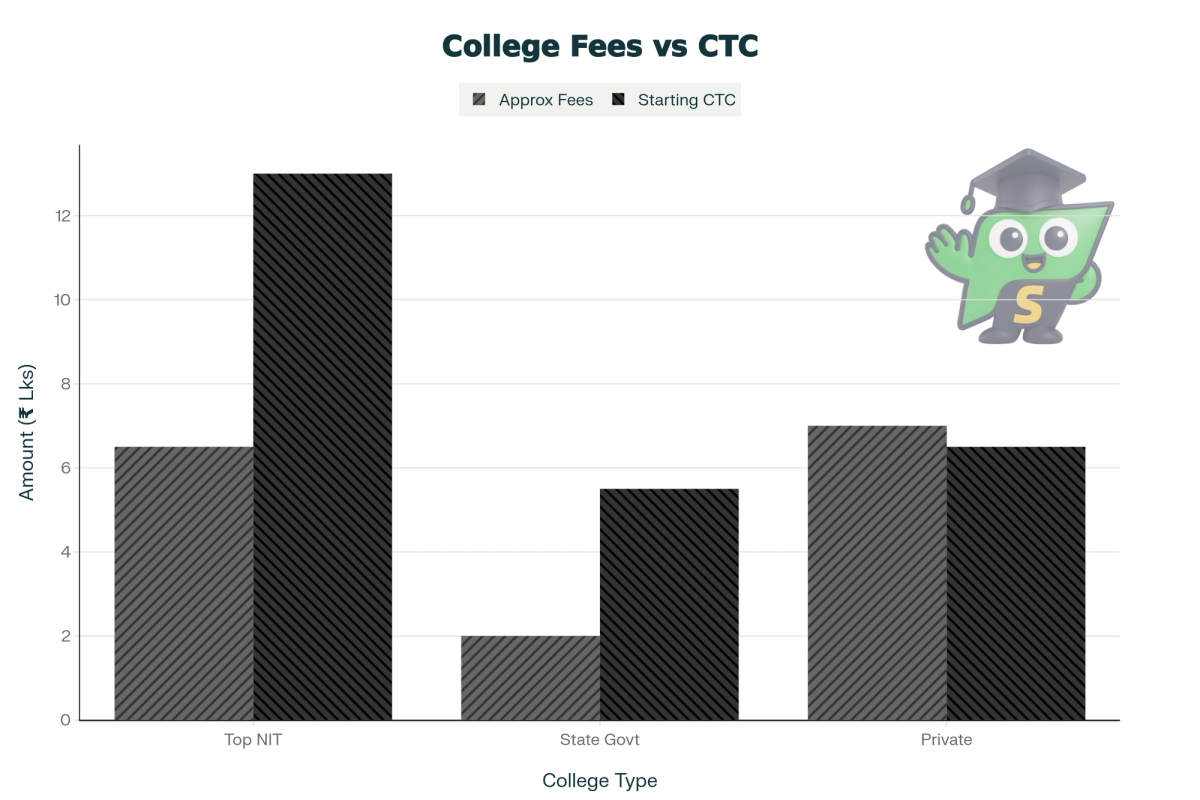
Indicative fees vs starting salary range
Where Prof Sam can fit into your journey
Prof Sam offers a calm, neutral space in the middle of all the confusion, helping students and parents see clear paths instead of pressure. In a session, the mentor understands the student’s interests, current performance, exam comfort, and dream work life, then uses simple tools and real data to outline options like a board‑only route, a TNEA‑focused plan, a JEE‑plus‑TNEA mix, or even non‑engineering paths if that fits better. Complete Guide to Engineering Entrance Exams for Tamil Nadu Students Branch‑confused students get clear explanations of what CSE, ECE, EEE, Mechanical, Civil, Chemical, AI/ML and other branches really mean in terms of study and careers, while JEE aspirants get personalised strategy on attempts, mock tests, and common mistakes Tamil Nadu students should avoid. Common JEE mistakes Tamil Nadu students make Last 30 Days Before JEE Main During TNEA or JoSAA counselling or when thinking about a drop year, Prof Sam helps families decide practically—looking at priorities, seat options, mental health, finances, and real chances of improvement—so the message is never “you will definitely get IIT or NIT,” but “these are your strengths, these are your options, and here is a realistic plan we can walk together.” TNEA vs COMEDK How to decide if a student must attempt a drop year
Need Personalized Guidance?
Book a consultation with Prof Sam and get expert advice tailored to your child's unique needs.
Book Your Consultation