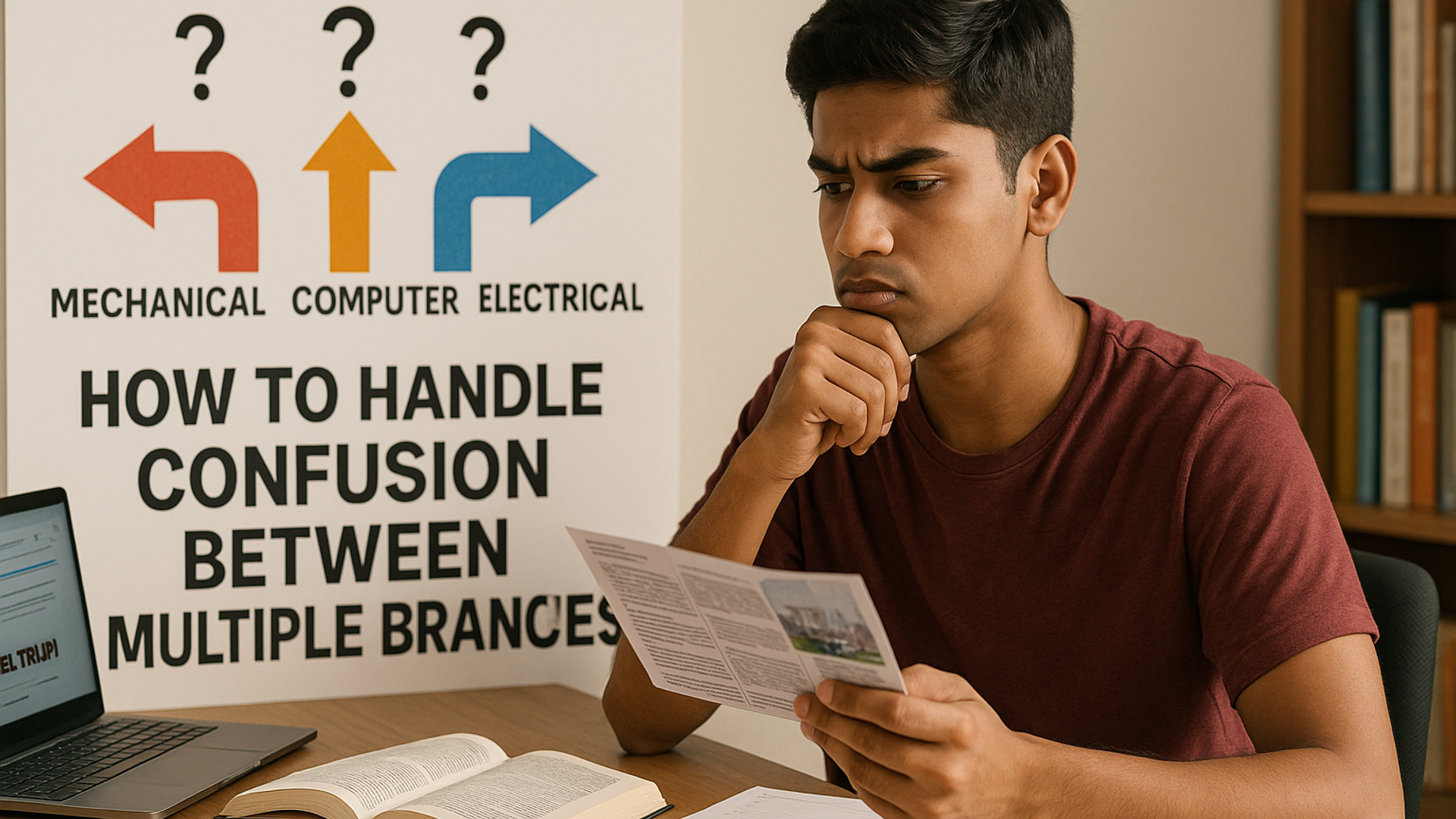
How to handle confusion between multiple branches
Confused between CSE, ECE, Mechanical, AI–ML and other branches after Class 12 in Tamil Nadu? Prof Sam explains how to handle branch confusion calmly.
You are not the only one confused between CSE, ECE, Mechanical, Civil, AI–ML, Data Science and so many other branch names. In Tamil Nadu, almost every Class 12 student who aims for engineering goes through the same stress during TNEA, JEE, COMEDK and college counselling. It often feels like choosing the “wrong” branch will ruin your future, and that fear itself makes decision-making harder.
This confusion is normal. It does not mean you lack clarity. It simply means you are trying to make a major decision with limited information, heavy expectations and worries about jobs and money. With the right mindset, honest self-reflection and proper guidance, this phase can become a chance to understand yourself better and choose your engineering path confidently.
Why Tamil Nadu students feel so confused
For many students in Tamil Nadu, branch confusion comes from a mix of marks, cutoffs, fees, family discussions and constant talk about placement “scope”. Even before students understand what ECE or EEE actually means, they hear terms like TNEA, JEE Main, NIT Trichy, IIIT, COMEDK and “core vs IT”.
Most higher secondary schools focus mainly on board marks. Career guidance arrives late or is too general. So even a well-performing student may not know the difference between branches or the fact that software companies hire from multiple engineering fields. When students finally look at the TNEA booklet or JEE options, it can feel overwhelming, like being pushed into deep water without learning to swim.
What actually matters in a branch – beyond the hype
If you ignore hype and focus on facts, some things become clear. Many IT companies hire students from CSE, IT, ECE, EEE and even Mechanical or Civil if they have coding skills and good projects. So the branch matters, but your skills and internships matter just as much.
Core branches like Mechanical, Civil and EEE still have good career paths in strong colleges. New-age branches like AI and Data Science are interesting but vary widely in quality depending on the college. A well-established branch in a reputed college is often better than a trendy branch in a weak institute.
Think of “branch + college” as a single package. When you evaluate both together based on your marks, rank and cutoffs, the confusion reduces and decisions become clearer.
Understanding yourself before chasing a branch
Instead of copying friends, take a moment to understand what excites you: coding problems, circuits, building machines, designing structures, or using data. Think about your work style too—do you prefer field work and hands-on tasks or computer-based, analytical tasks? Both are valid; what matters is your comfort and interest.
Picture your life four to five years ahead. If you see yourself in advanced tech, research or aiming for opportunities abroad, CSE or ECE at a strong college might make sense. If you love machines, construction or energy systems, a good core branch with strong labs could be a better match.
A counselling session with Prof Sam looks at your interests, marks and family situation together. This shifts the question from “CSE vs ECE?” to “Which path fits your strengths and life goals?”, reducing stress for both students and parents.
TNEA vs JEE vs COMEDK – why this adds to confusion
The confusion grows because Tamil Nadu students have multiple admission paths: TNEA for state colleges, JEE Main for NITs/IIITs, and exams like COMEDK for Karnataka colleges. Each path has different colleges, cutoffs, fees and placement patterns. So the same branch can mean very different experiences in different institutions.
One major doubt is whether to write JEE Main or depend fully on TNEA. Many students avoid JEE thinking it’s “too tough”, without realising it opens opportunities like NIT Trichy. But preparing for everything without a plan can dilute performance. Guides like Complete Guide to Engineering Entrance Exams for Tamil Nadu Students and [link:should-tamil-nadu-students-write-jee-main] can help you choose exams that truly match your goals.
Students also assume that CSE in any college provides the same future. But CSE at NIT Trichy or a strong COMEDK college is not equal to CSE in a weaker college. So it is essential to evaluate college reputation, placements, fees and environment—not just the branch name. You can understand this better through discussions on topics like TNEA vs COMEDK, Colleges in Tamil Nadu that Accept JEE Main and What rank is needed for NIT Trichy.
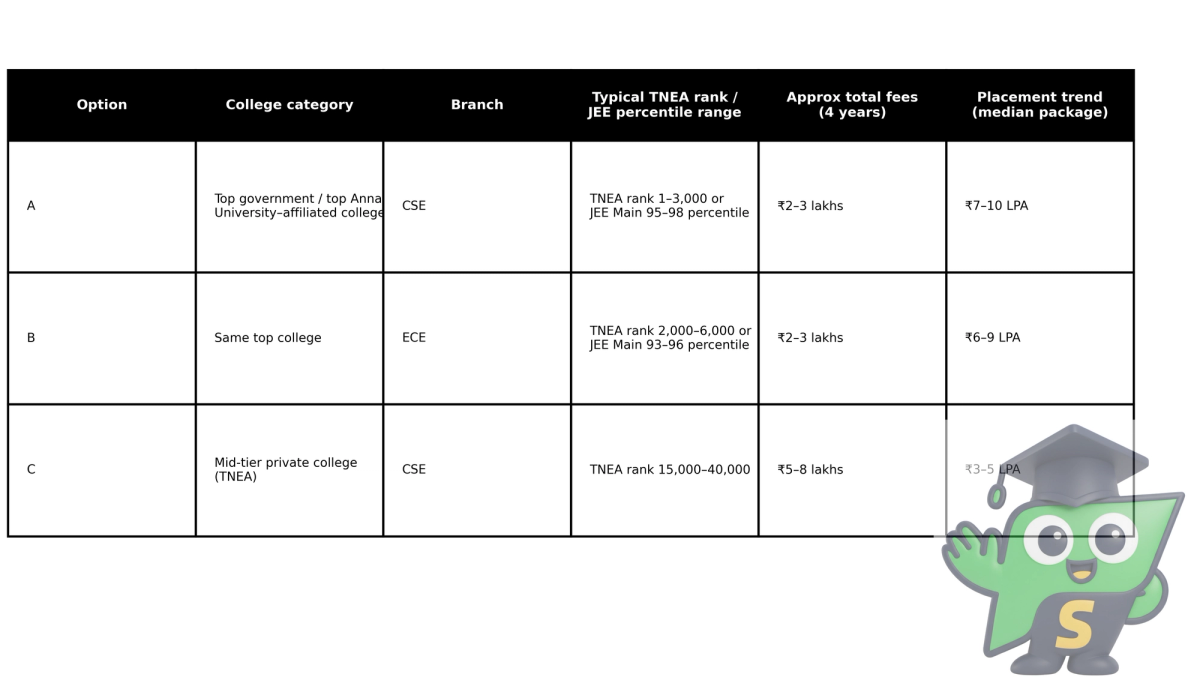
Table Instruction 1
Compares three example options: CSE at a top TNEA college, ECE at the same top college, and CSE at a mid-level college. The table will show typical TNEA cut-off range (or JEE percentile for NIT), approximate fees, and general placement outcomes, so that readers can see how “college + branch combination” changes the overall picture.
Common real-life branch confusion stories
In many Tamil Nadu homes, branch confusion leads to stress and arguments. Students may prefer CSE because peers talk about coding or startups, while parents feel ECE or Mechanical is more “stable”. Some students have no strong interest in any branch but feel afraid to admit it.
Many students who enjoy physics or machines get pushed into IT because of “scope” pressure. Later, they feel disconnected from their course. Others who want CSE may end up in core branches due to TNEA ranks or fees, not knowing that they can still get software jobs with self-learning.
During counselling, last-minute panic is common. Students keep switching choices without a clear plan and feel shocked at the final allotment. A well-prepared, realistic priority list created earlier can prevent these emotional decisions.
A gentle way to compare branches
Comparing branches is really about choosing between different journeys.
- CSE focuses on programming, software and computer systems.
- ECE blends electronics, communication and some coding, giving access to both IT and core roles.
- Mechanical/Civil involve labs, design tools, manufacturing and site work, and can provide strong careers when combined with modern tools and good communication.
AI–ML and Data Science are specialised areas built on strong fundamentals from CSE. Often, choosing a broad branch in a good college and then specialising through electives and projects is the safest path.
Sit with parents or a mentor and rate each branch–college option as high, medium or low based on interest, college strength, placements, distance and fees. A simple rating system quickly reveals the most suitable choices.
Common mistakes students make – and how to correct them
The biggest mistake is copying friends. Everyone’s goals and abilities differ, so following the crowd can push you into a branch you don’t enjoy. Another common mistake is choosing trendy branches like AI/DS without checking if the department has good faculty, labs and placement support.
Many students forget backup options and list only top colleges. When ranks don’t match, disappointment hits hard. A balanced list with dream, realistic and safe colleges avoid this.
With early research and guidance from mentors like Prof Sam, expectations stay practical and stress reduces.
How parents can support without increasing pressure
Parents carry emotional and financial burdens, so their worry is natural. But when that worry turns into comparisons or forceful opinions, students feel trapped. A better approach is open conversations focused on the student’s interests.
Parents should listen to what students enjoy—coding, circuits, machines, design or hands-on work—and help them explore options through facts: cutoffs, fees, placements, hostel safety and long-term growth. It helps to look beyond prestige and understand real opportunities.
Parents who accept backup plans, consider good private or COMEDK colleges, or even evaluate a drop year with proper planning make the counselling process healthier. Reading resources like TNEA vs COMEDK, Colleges in Tamil Nadu that Accept JEE Main and How to decide if a student must attempt a drop year together can turn confusion into teamwork.
When to consider a drop year and branch change decisions
Sometimes the branch–college combination a student gets truly doesn’t match their goals. Maybe it’s a low-tier college, a mismatch with interests or a result affected by personal issues. In such cases, students consider a drop year.
A drop year is a serious decision. It should be taken only when there is a strong reason and a clear plan for improving performance. Emotional decisions right after result day often backfire. With guidance from How to decide if a student must attempt a drop year and a counsellor, students can weigh costs, stress, preparation strategy and alternate routes.
Branch change after first year is possible in some colleges but depends on high CGPA and seat availability. This means working hard in first year even if you dislike the branch, and still there is no guarantee. So avoid relying on branch change as the main plan.
Related Topics
📌 How parents can guide without pressure
📌 When students should take a gap year
📌 How to handle confusion between multiple branches
📌 How to talk to teens about career choices
📌 Why many students regret their college choice
📌 How to know if coaching is actually needed
📌 When to seek professional counselling
📌 How early planning affects college admissions
📌 How parents can avoid common mistakes
📌 How to plan finances for four years of engineering
How Prof Sam can walk with you through this confusion
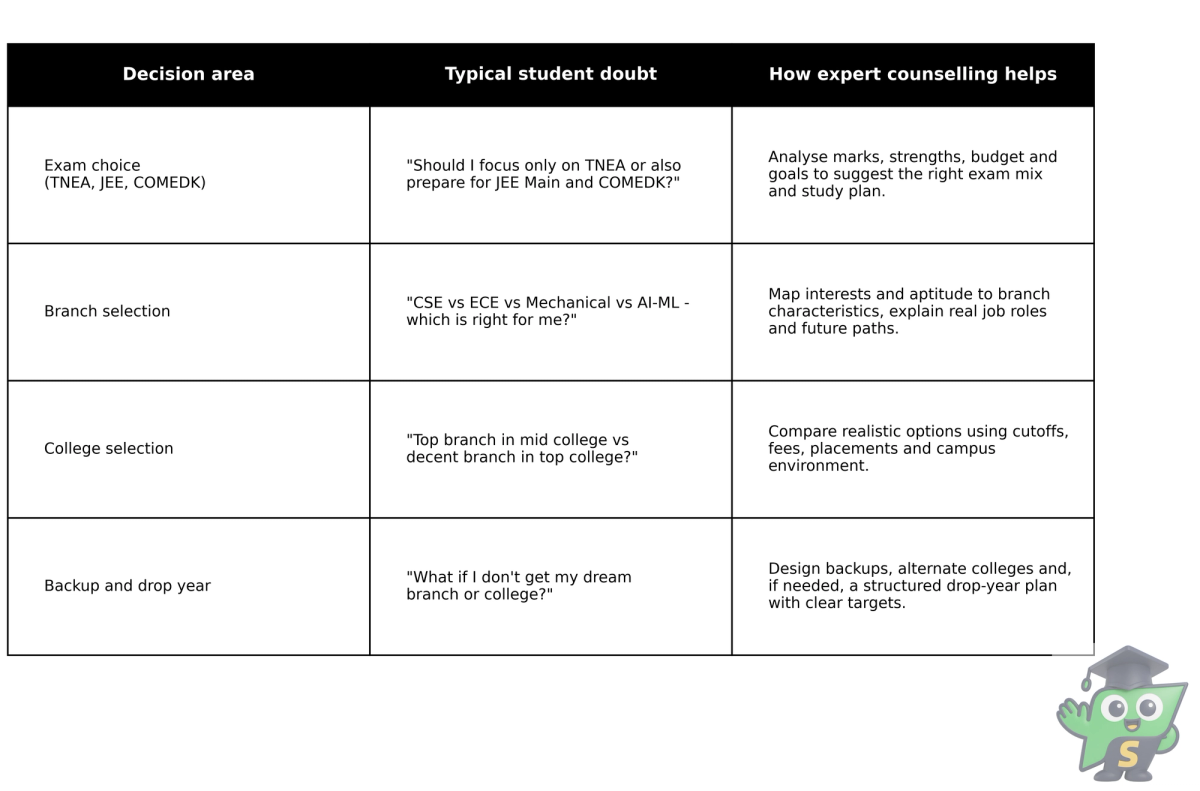
Branch confusion doesn’t have to be faced alone. A structured conversation with a mentor helps navigate choices calmly. At Prof Sam, guidance includes understanding your interests, mapping them to suitable branches, comparing TNEA, JEE Main, NIT/IIIT options, and exploring COMEDK or non-TNEA colleges when relevant.
You can discuss whether writing JEE Main aligns with your goals, how to prepare while managing boards and how to create a personalised plan using ideas from Last 30 Days Before JEE Main and How to Manage Both Board Exams and JEE.
When counselling begins, Prof Sam helps create a personalised priority list of colleges and branches based on your rank, budget and preferences. You also get clarity on choosing between options like NIT Trichy vs top Tamil Nadu colleges, strong ECE vs average CSE, and whether to consider a drop year.
The aim is simple: help students shift from fear and confusion to confident, well-informed decision-making after Class 12—supported by parents, not pressured by them.
Need Personalized Guidance?
Book a consultation with Prof Sam and get expert advice tailored to your child's unique needs.
Book Your Consultation