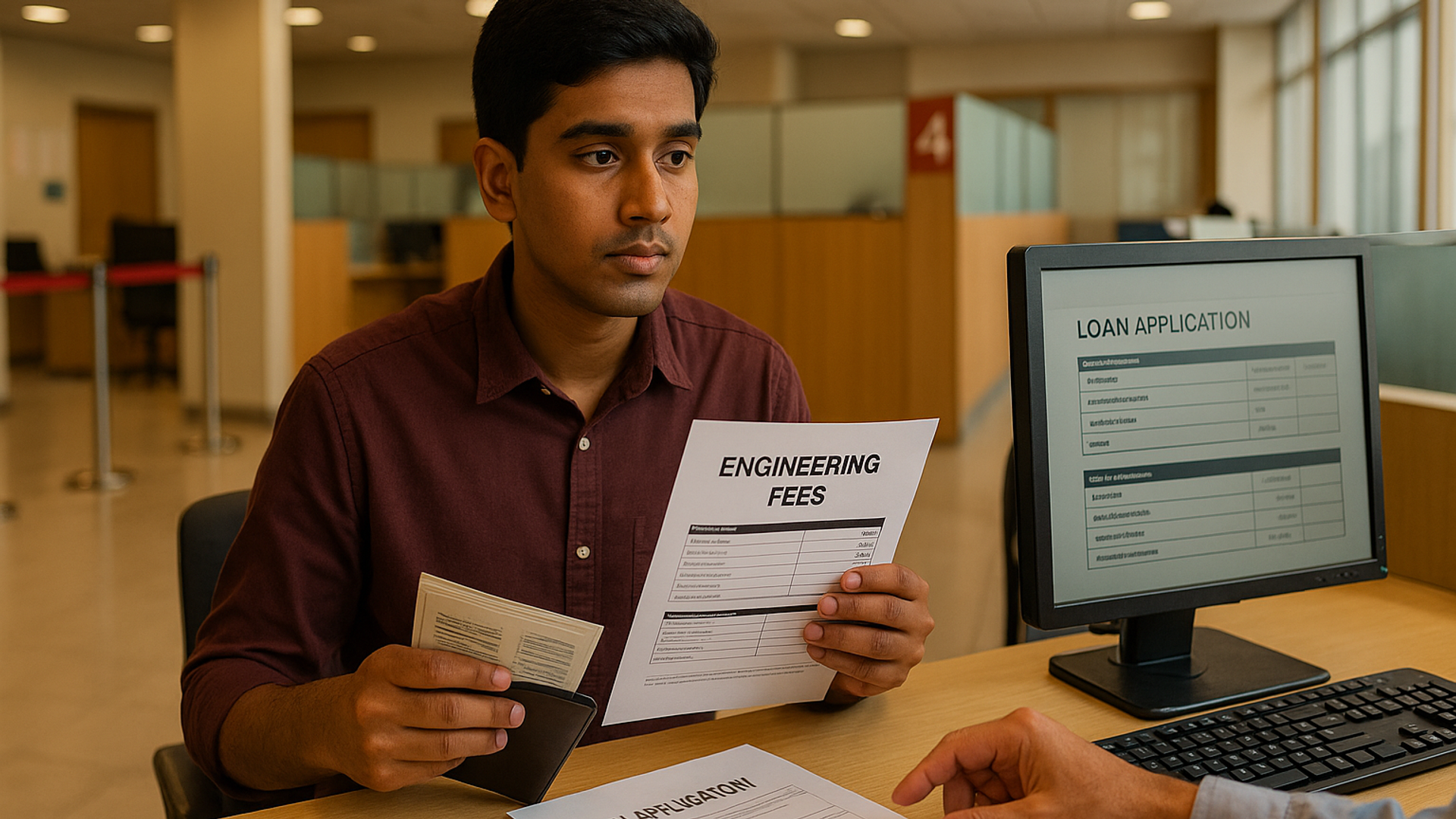
How to plan finances for four years of engineering
Learn how Tamil Nadu students can plan finances for four years of engineering. Real costs, scholarships, loans, and smart budgeting tips from Prof Sam.
Many Tamil Nadu engineering aspirants are first‑generation engineers, and parents usually save whatever they can. But the real cost goes far beyond tuition: hostel, mess, books, laptop, internship travel, and daily expenses quietly add up. Even though government colleges may charge only around ₹48,000–1,00,000 in total tuition, NITs about ₹6,00,000, and top private colleges like VIT or SRM around ₹20–24 lakh, you must still add hostel fees, mess (₹50,000–70,000 a year), a ₹40,000–65,000 laptop, books, and ₹8,000–15,000 per month for personal needs. One Coimbatore student’s father even sold ancestral land for first‑year fees in a private college, only to realise in second year that the total four‑year cost would be much higher—good financial planning helps avoid this kind of panic and guilt.
Breaking Down Costs Year by Year
First Year: Highest expenses. You pay admission fees, caution deposits, uniform, laptop, textbooks, and hostel setup. Many colleges collect refundable deposits for library and labs. Have this money ready before counseling deadlines.
Years 2–3: Expenses stabilize. You own your laptop and buy second-hand books. But now you invest in certifications, coding courses, and internships. Budget five to ten thousand per semester for skill-building. Internships may be unpaid initially.
Fourth Year: Placement preparation year. Budget for interview travel, formal clothes, higher study applications (GRE, GATE). Keep fifteen to twenty thousand as a buffer for surprises.
Action: Sit with parents, write down expected year-by-year costs, identify funding sources (savings, loans, scholarships, part-time work), and track progress quarterly.
Understanding Education Loans Wisely
Many Tamil Nadu families use education loans. Banks like SBI, Bank of Baroda, and PNB offer loans up to seven and a half lakh rupees without collateral. Interest rates range from 7–10 percent per annum. Most banks provide a moratorium—no EMI until six months to one year after graduation.
But here is the critical mistake: many students ignore repayment after getting their first job. They buy phones and gadgets on EMI while neglecting education loans. Interest accumulates. Credit scores fall. Parents receive bank calls. This damages their financial future badly.
What to do: Borrow only what you truly need. Use loans for tuition, hostel, and essentials—not lifestyle. Calculate EMI once you secure an average engineering salary (five to eight lakh rupees per year) and ensure EMI does not exceed thirty to forty percent of starting salary.
Good news: interest paid on education loans is tax-deductible under Section 80E for eight years. If your family income is below the threshold, you may qualify for government interest subsidy schemes where the government pays interest during your course.
Scholarships: Free Money Waiting
Scholarships require no repayment. Yet many Tamil Nadu students do not apply, thinking scholarships are only for toppers.
Tamil Nadu government offers scholarships like the Higher Education Scholarship and First Graduate Scholarship, providing seven thousand to twenty thousand rupees yearly. Apply through your college after admission.
National scholarships include Pragati Scholarship (fifty thousand rupees/year for girls in technical courses) and AICTE Merit Scholarship (ten thousand to fifty thousand rupees annually for students scoring above eighty percent in Class 12). Apply via the National Scholarship Portal between June and October.
Corporate scholarships: Amazon Future Engineer offers fifty thousand rupees/year to girls in Computer Science. IOCL offers three thousand rupees/month. ONGC offers four thousand rupees/month for SC/ST students.
Your college also offers merit-based scholarships. Many private colleges waive fees partially for students scoring well in entrance exams. Ask during counseling. Applying costs nothing. Not applying costs thousands.
Common Financial Mistakes to Avoid
Small daily expenses add up. You think five hundred rupees weekly is fine. It is not. Track every rupee for one month. Set a strict weekly budget and stick to it.
No emergency fund. Your laptop crashes. You need urgent travel home. Without an emergency buffer, you borrow at high interest. Keep thirty to sixty thousand rupees untouchable for emergencies.
Lifestyle spending before earning. Expensive phones, branded clothes, gaming consoles on EMI. Never take personal loans for lifestyle during college. Upgrade after earning.
Ignoring part-time work. Engineering students can earn five thousand to twenty thousand rupees monthly through freelancing, tutoring, or coding projects. Four to six hours weekly covers your personal expenses and reduces family burden. Platforms like Internshala, Upwork, and Vedantu actively hire engineering students.
Not discussing money with parents. Have monthly financial check-ins. Tell them what you spent and what is coming. Transparency reduces stress for everyone.
How Parents Can Support
Start conversations in Class 11, not after admission. Discuss how much you have saved, what you can afford, and backup plans. Honesty prevents stress.
Teach your child financial discipline. Open a bank account in their name. Show them net banking, expense tracking, and bill payment. Give them a monthly allowance and let them manage it.
Monitor monthly without micromanaging. Check their expense tracker. Discuss if they are staying within budget. Trust them. Keep aside ten to fifteen percent extra for contingencies like fee hikes or unexpected placement prep costs.
Encourage part-time work. Five thousand rupees monthly equals sixty thousand rupees over four years—covering books, certifications, or travel.
How Prof Sam Helps You Navigate This
At Prof Sam, we understand that college selection is as much financial as academic. We help Tamil Nadu students and families make informed choices balancing ambition with affordability.
We compare return on investment across colleges. Should you attend private college at four lakh per year or government college at twenty-five thousand per year? TNEA vs COMEDK We show real placement data, salary packages, and loan repayment scenarios.
Should you write JEE Main alongside TNEA? Should Tamil Nadu Students Write JEE? .We guide entrance exam strategy to maximize your chances of securing affordable, quality colleges.
Confused about branch selection? What rank is needed for NIT Trichy We explain which branches offer better ROI and placement packages. We connect you with scholarship information, loan advisors, and financial planning resources.
We also guide drop-year decisions How to decide if a student must attempt a drop year. A drop year has its own costs—coaching fees, living expenses, opportunity loss. We help you calculate whether improving your rank financially justifies waiting Last 30 Days Before JEE Main.
Because ultimately, engineering is about building a career without crushing your family with debt How to Choose Coaching for JEE in Tamil Nadu.
Related Topics
📌 How parents can guide without pressure
📌 When students should take a gap year
📌 How to handle confusion between multiple branches
📌 How to talk to teens about career choices
📌 Why many students regret their college choice
📌 How to know if coaching is actually needed
📌 When to seek professional counselling
📌 How early planning affects college admissions
📌 How parents can avoid common mistakes
📌 How to plan finances for four years of engineering
Conclusion: Start Planning Today
Financial planning is not something you do after admission. Start in Class 11. Sit with your parents. Write down expected year-by-year expenses. Identify funding sources. Apply for scholarships. Research education loans. Set up an emergency fund. Look for part-time opportunities. Make informed college and branch choices based on both passion and practicality.
The goal is not just getting an engineering degree. The goal is finishing without financial stress, without guilt, and without compromising your family's security. Thousands of Tamil Nadu students do this successfully. You can too.
Engineering is a beautiful journey. Do not let money worries steal the joy of learning, building, and discovering who you are. Plan well. Spend wisely. Study hard. Your future is bright. Prof Sam is here to help every step of the way.
Need Personalized Guidance?
Book a consultation with Prof Sam and get expert advice tailored to your child's unique needs.
Book Your Consultation