
How to Choose the Right Engineering Branch After Class Twelve
Feeling lost choosing your engineering branch after Class 12? Here’s your supportive, step-by-step Tamil Nadu guide with real advice on branches, exams, and future plans.
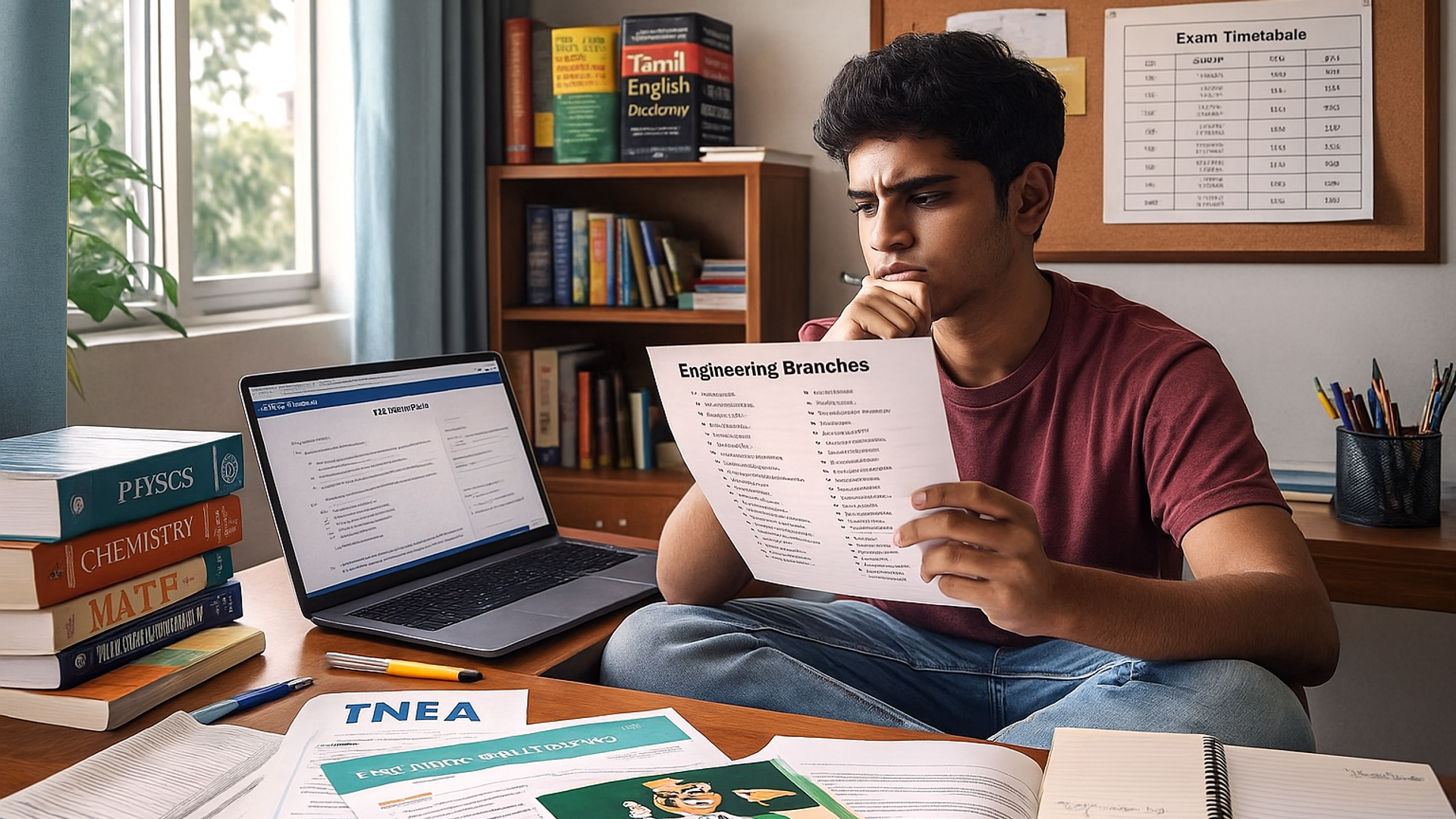
The weeks after Class 12 board exams can feel overwhelming, can't they? If you're a student in Tamil Nadu—or a parent standing beside your child—you may find your thoughts spinning faster than they ever did during the actual board preparation. The exams end, but the questions only seem to multiply. What branch should I select? Will I be happy in Computer Science, or should I try for Electronics? What happens if I don’t get the branch I’ve been dreaming of? Some days you may feel confident, and on others you might feel completely unsure, especially when relatives, neighbours, and family friends offer their own versions of advice. It’s a confusing stage, but it’s also a very human one, because these decisions feel big. This post is meant to sit with you through that confusion—not telling you what you must choose, but helping you understand how to approach the decision with clarity, honesty, and a mindset that supports your long-term growth.
Why Choosing the Right Branch Feels So Hard in Tamil Nadu
For many students in Tamil Nadu, the pressure feels almost cultural. Schools talk about toppers all year long, coaching centers fill your head with expectations, and the word “engineering” becomes a default goal even before you’ve had the chance to explore what you really enjoy. Families mean well, but the comparisons can start early—the cousin who joined an IIT, the friend’s daughter who secured CSE in a top government college, the neighbour’s son who got placed in a big IT company. It builds an invisible weight around you, and by the time you finish your board exams, you’re left juggling not just your dreams but also everyone else’s opinions.
What makes this stage even more challenging is that students spend months focusing intensely on exams, but the actual discussion about which branch to choose often happens at the last minute. It’s only when the counseling forms appear on the website or cutoffs get released that the urgency hits. In that rushed moment, you’re expected to understand placement trends, branch workloads, career paths, and college reputation—things no one prepared you for in school. With so little time and so much pressure, the fear of making the wrong decision can feel suffocating. But remember that you’re not the only one feeling this way. Every year, lakhs of students in the state stand exactly where you stand now, uncertain but hopeful. And just like them, you’ll find your path too.
What Actually Matters When Choosing a Branch
Most decisions in Tamil Nadu still happen based on what someone hears from a senior, a relative, or a neighbor. You might hear that Computer Science has the highest packages, that Mechanical is too risky, that girls shouldn’t choose certain branches, or that IT is a lighter alternative to CSE. These statements float around everywhere, but they’re rarely the full truth. The branch that excites your friend might bore you, and the path someone else succeeded in may not match your strengths or interests.
What really counts is a combination of your curiosity, your comfort with the subjects, the kind of work you see yourself enjoying, and a realistic understanding of the opportunities each branch offers. If writing code brings you joy or at least a sense of satisfaction, then CSE might feel natural. If machines, engines, and hands-on problem-solving excite you, Mechanical might be a rewarding challenge. If the idea of circuits, communication systems, or electronics sparks something inside you, ECE could be a great fit. It’s okay if you don’t know the answer immediately. Many students don’t. That’s why exploring before deciding is so important. Reading about branch-specific subjects, watching short videos from professors or alumni, or talking to seniors you trust can help you identify what feels right.
At the same time, you must stay grounded. Not every student can secure the top branches in the top colleges, and that’s perfectly fine. Sometimes you may need to strike a balance between college reputation and branch preference, depending on your cutoff. Choosing a slightly different branch in a reputable college can sometimes open more doors in the long run than choosing your dream branch in a college that lacks exposure or placement support. These are tough decisions, but they become easier when approached with both heart and reason.
Understanding the Major Branches and Their Scope
Students often hear about branches, but rarely understand what they truly involve. Computer Science continues to be the most sought-after choice, largely due to placement opportunities and the expanding tech industry. But it’s a branch that demands consistent practice, patience, and a genuine interest in logic, math, and coding. IT is closely related, though often lighter in hardware-heavy subjects. Both can lead to excellent careers, but only when you put in the effort.
ECE is ideal for those who enjoy both mathematical depth and an understanding of how devices communicate and function. It offers openings not just in core electronics but also in software, telecommunications, and public sector exams. EEE leans more toward electrical systems, energy, and power distribution, and while it may seem difficult at first glance, it provides a strong, evergreen foundation.
Mechanical, Civil, and other core branches build the infrastructure around us. They demand patience, practical thinking, and often involve workshops, lab hours, and physical understanding of materials. Though placements may not always seem as flashy as tech branches, these fields are deeply respected and essential in government sectors, construction, manufacturing, and public works.
Then there are modern interdisciplinary branches like AI, Data Science, and Mechatronics. These sound exciting and cutting-edge, but their value depends heavily on the quality of faculty and exposure in the specific college you choose. A trendy branch in a poorly equipped college may not help you as much as a classic branch in a strong institution.
The Role of Cutoffs, Rankings, and College Quality
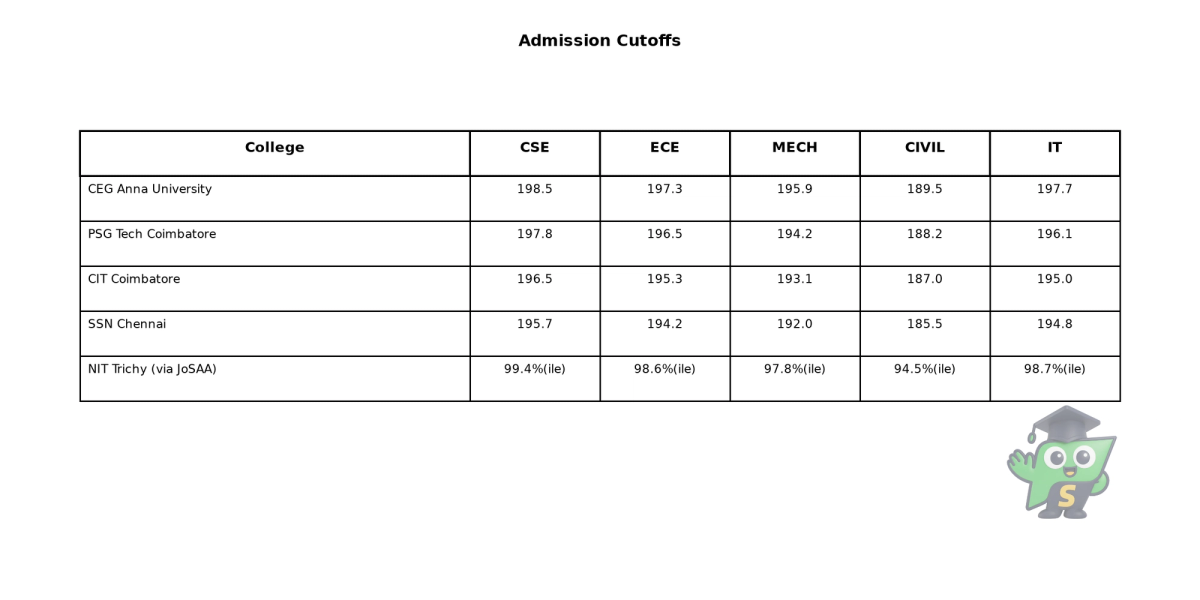
Tamil Nadu’s engineering admissions largely flow through TNEA, a counseling system based on your Class 12 cutoff marks. The competition is fierce for popular branches in prestigious colleges like CEG, PSG Tech, and CIT. Occasionally, students shift their preferences dramatically because of cutoffs, especially when they realize that certain branches are nearly impossible to enter with their score.
This is where things get stressful—balancing your dreams with what your marks can realistically offer. Families may call relatives, check online lists repeatedly, or compare last year’s cutoff tables while trying to guess what will happen this year. It can feel like a tug-of-war between hope and reality.
But having a clear picture of how cutoffs generally behave helps calm that storm. A simple comparison of closing cutoffs gives you a sense of direction, reduces unrealistic expectations, and prepares you emotionally for counseling rounds. It’s better to enter the process informed than to face disappointment midway.
TNEA 2025 Estimated Closing Cutoffs for Top Tamil Nadu Colleges
Fees, Placements, and Return on Investment – What To Weigh
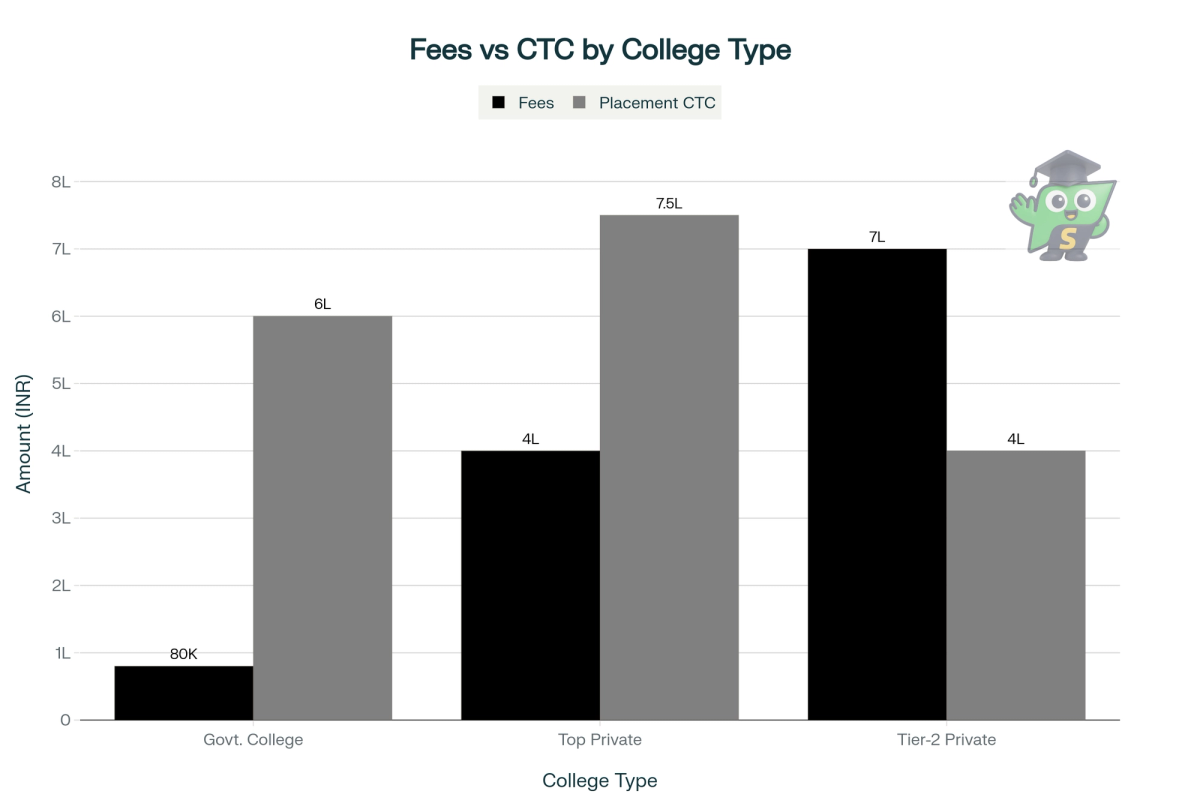
Engineering isn’t cheap everywhere. Government colleges offer incredibly affordable fees, but getting a seat is tough. Private colleges vary widely—some with excellent facilities and faculty, others with impressive advertisements but not-so-impressive outcomes. Parents worry about paying lakhs for a degree and whether it will lead to a job. Students worry about whether they’ll get internships, strong placement training, or opportunities to build their skills.
The truth is that evaluating a college goes far beyond checking its “highest package.” You need to understand what the typical student gets, not just the topper. Median salaries reveal far more than flashy headlines. A college with strong alumni presence, internship opportunities, and consistent training often provides a better long-term return on investment than one that simply showcases a few exceptional placement numbers. When you look at visuals comparing fees with average placements, things become much clearer, because they reflect what a real student—not an outlier—can expect.
Data for Chart: Fees vs. Average Placement CTC (2025)
The JEE Main and Other Exams Puzzle
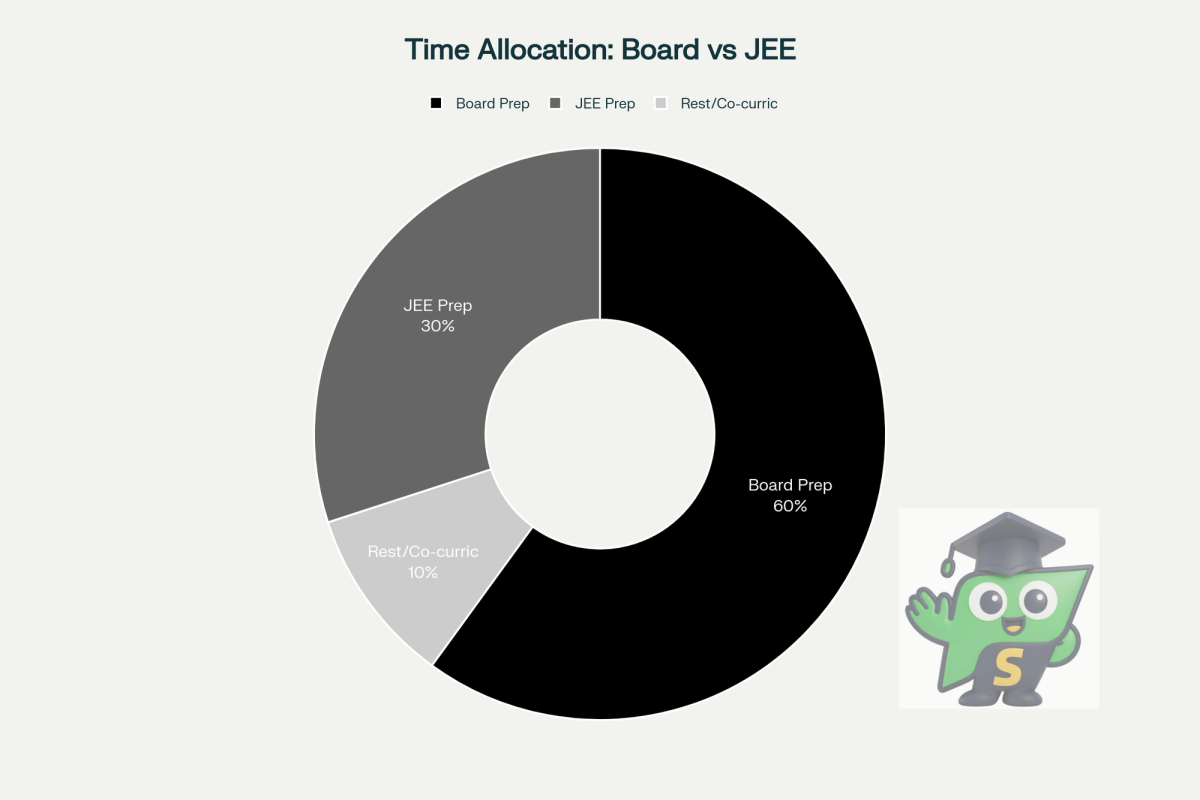
While TNEA is the major path for Tamil Nadu students, thousands also attempt JEE Main. This opens the door not just to NIT Trichy, but to other NITs, IIITs, and central institutions. But balancing both board preparation and JEE coaching can feel like running two races at the same time. You may feel torn between scoring well in your board practicals and solving high-level JEE problems. It's common for students to doubt themselves, especially when their mock test scores fluctuate.
Deciding which exams to write needs clarity—not fear. Some students aim for JEE because they want exposure beyond the state system, while others choose exams like VITEEE or COMEDK for broader options. The key is to choose based on your goals, not pressure. If you’re unsure whether JEE suits you, reading comparison guides helps you understand the time investment required, the cutoff expectations, and how feasible it is for your profile. A visual showing how a typical student divides their time between board work and entrance prep can also help you structure your day without burning out.
Data for Chart: Time Allocation (Typical Student, Class 12 PCM Group)
Common Mistakes Students Make – And How to Recover
Every year, students unintentionally repeat the same mistakes. Some select a branch solely because it’s the trend, only to discover later that they dislike the subjects. Others choose a college only because it fits their cutoff, without checking whether the faculty, labs, or campus culture suit their needs. A few ignore alternate pathways and panic when they don’t get their dream branch in the first round of counseling.
Recovering from these mistakes begins with honesty. If you truly dislike the branch you selected, many colleges allow internal branch changes after the first year, depending on your academic performance. You can also explore minor specializations or electives to broaden your opportunities. Some students even take a drop year to prepare with better direction, but this should be a thoughtful decision made with family support and not out of sudden panic. Guidance, especially when neutral and personalized, can prevent mistakes before they happen and help you correct your path if needed.
How Parents Can Support Their Children in Choosing a Branch
For parents, this phase can also be emotionally draining. You want the best for your child, and sometimes that desire comes across as pressure—even when you don’t intend it. In many Tamil Nadu households, conversations about branches and colleges become tense simply because both sides are scared of the future. But the most powerful thing a parent can offer is reassurance. When a child feels seen, heard, and supported, their decision-making improves, and their confidence grows. Parents who listen openly, explore options with curiosity, and avoid forcing their preferences often help their children discover paths that they genuinely enjoy and succeed in. Engineering is a long journey, and emotional support often matters as much as coaching classes and textbooks.
When to Ask for Help – Prof Sam’s Guidance Makes a Difference
There’s no shame in seeking help when the choices feel too heavy or confusing. A mentor who understands both the student’s feelings and the practical reality of admissions can make the process far smoother. At Prof Sam, the goal isn’t to push you toward a particular college or branch, but to walk alongside you and help you think clearly. Whether you’re confused between two branches, unsure how to prepare for both JEE and boards, or anxious about whether your cutoff will secure a seat, a calm conversation with an experienced guide can save you weeks of stress.
Check out Complete Guide to Engineering Entrance Exams for Tamil Nadu Students, Colleges in Tamil Nadu that Accept JEE Main , How to Manage Both Board Exams and JEE , Common JEE mistakes Tamil Nadu students make , and What rank is needed for NIT Trichy on our blog for deeper guides. If you’d like to talk to a mentor, you can book a friendly, no-pressure session with Prof Sam. Sometimes, the right conversation is all it takes to cut through the fog.
Other Helpful Guides for Your Journey
Here are internal links you may want to explore next:
📌 Signs that a student is suited for CS
📌 Mechanical engineering for the future
📌 How to decide between AI ML and core CS
📌 Common mistakes students make while choosing branches
📌 Which branch fits introverts
📌 Which branch fits creative students
📌 Which engineering branch gives the best work-life balance
📌 Branch myths students should ignore
📌 How to compare branch scope in India vs abroad
Conclusion
Choosing the right engineering branch after Class 12 is never a perfect science—it’s a mix of understanding yourself, being realistic about cutoffs, placements, fees, and college quality, and most importantly, keeping your mind and heart open to learning. Your journey is unique. Marks, ranks, and trends matter, but they do not decide your worth or your future forever.
Use this decision period as a time to listen to your own interests, talk openly with family, and ask for advice from people who genuinely want to help. No choice is final unless you stop believing in your potential. At Prof Sam, we’re always just a call or message away, ready to walk with you through these crossroads.
Need Personalized Guidance?
Book a consultation with Prof Sam and get expert advice tailored to your child's unique needs.
Book Your Consultation